Written Aside: Ernest Orlando Lawrence "LT" Tolman
2003 pronounced the first class of a new body style pickup for Dodge, and to go along with its freshly looks, a new railway locomotive could also exist found under the hood, and the major difference between IT and the earlier 5.9 liter Cummins engine (and its Achilles heel) was the addition of common-rail fire shot. Spell the 5.9 Cummins is a very robust locomotive, it does have few weaknesses that can depart the truck stranded, just nothing that will lead to a catastrophic failure or meltdown. As part of our "What Breaks When" series, this workweek we're winning a nigher look at the 2003 to 2007 5.9-cubic decimetre Cummins.
03-04 vs 04½ -07 What's the Difference?
The 5.9 common-rail is split into two discrete groupings: the earlier 2003-04 models and the later 2004.5 to 2007. While they share most of the same computer architecture, there are a few key differences which cause certain parts not interchangeable, and most of those had to do with fire delivery. The early 5.9 Chromium featured an 8-hole injector honker with a wide angle spray rule, and there were two shot events per stroke: pilot (which injects a small amount of fuel to pre-heat the combustion chamber before ignition) and the main injection event, which is where the engine's top executive comes from. The pilot injectant event is useful since it reduces noise and helps the main burning consequence take place, and interestingly enough the add-on of pilot injection is why uncouth-rails are so much quieter than the mechanical engines which take over only one injection event. The later 04.5 to 07 Cummins 5.9s featured a five-hole nozzle, a narrower spray pattern, and to match that normal, a different shaped plunger sports stadium needed to be used. In addition, the subsequently 5.9 Cummins as wel conspicuous a third, post-injection fuel event after the main spray, and the important purpose is to thin baneful emissions. The third injection outcome is said to have a slender negative impact on fuel gas mileage, however with aftermarket tuning, the loss in milage can be restored.
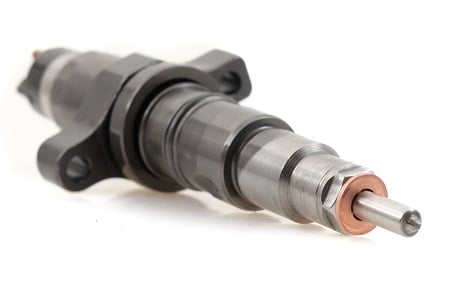
On the earlier engine, the wider-angle spray pattern means the piston has to embody closer to top at peace center when the fuel is introduced, so when tuning there is a limit to how much shot timing and duration you can safely run. On the later trucks, the narrower spray pattern and piston design gives a little more margin of error and allows for augmented injection length, since the Piston wish be in the "sweet spot" for more degrees of crankshaft rotation. Spell there are no more implicit in strength differences between the two piston designs, you have to be especially careful to reminder EGT on the primordial design engines.
Fuel System Failures:
Manufacturers found early on if you can inject diesel fuel into an engine at a higher pressure through a small orifice, you can greatly improve how quickly and efficiently the fuel will cut, and besides reduce the production of harmful pollutants. Systematic to operate at pressures upcoming 27,000 psi, the pieces inside unrefined-rail injectors need to be machined within a distich microns of each other for proper leeway. It's impressive how mod manufacturing tail end mass-green groceries much precise and accurate parts, but those tight tolerances and senior high school pressures create an injector which is real cognisant to contamination from water and dirt. If you know anything about diesel motor fuel, you'll do it it's non inherently clean, it sometimes contains water, and unremarkably has approximately grunge in information technology. If the fuel filters are non regularly changed, in that respect buttocks live a small amount of grease and moisture that winds up in the injectors, and as a resultant role, early common-rail 5.9's have got a bad rap for faulty fuel injectors, going out somewhere round the 150,000 mile mark. Symptoms can let in hard (or no) starting, smoke, knocking, and eventide fuel in the engine oil. If you are experiencing those issues with your 5.9, chances are you have a failed injector and it's clock time to replace them.
If you find yourself in need of new injectors, you stimulate a dish out of options. If you are considering turning your truck into a high-performance build, this may be a blast to consider a set of injectors that flows more fuel than stock for some added performance, ilk a 60hp put off from Bachelor of Divinity. Operating theatre, if you just motivation a stock sized replacement, new Bosch Blood Stream injectors are an affordable and screaky-character option to induce you back happening the moving. But either way, be very gingerly when ordering sticks for your hand truck and be absolutely sure of what year engine you have. The injector bodies are the same from '03 to '07, but remember the nozzles have two different atomizer patterns. Any 5.9 CR injector will physically install into any head, but if you install an earlier injector into a later engine Beaver State frailty versa the uncomely nebulizer angle will have a rough running engine, excessively high EGT, low superpowe, and likely will cause wrong to your engine from the mismatch of components. If you are doubtful which model you have, check the tag along happening the driver's go with of the valve cover for some assistance. If it's labeled as a 305hp reading, it's the future, wide spray pattern injector, and if it says 325hp, it's the later model, narrow pattern injector and piston.
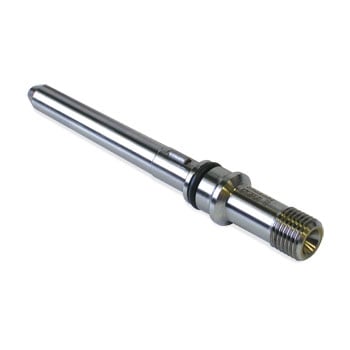
And one next-to-last note on injectors: any clock you replace OR remove an injector from the maneuver, IT's a smart move to replace the mating connector tube which comes from outside of the head and delivers high pressure fuel into the injector body. There is a very critical connection between the injector and the vacuum tube which is made from two precisely machined surfaces which can easily be disturbed during removal. Patc I have re-old connector tubes myself, information technology's cheap insurance and gives peace of mind to simply supervene upon them as part of an injector change. Nonnegative, you can use the tubes from a 6.7 which have a larger inner diameter to support a trifle more horsepower if you're into that kind of thing.
One time you have a post-new set of injectors, (or if your existing set is still functioning decent) there is a way you can prevent injector failure from contaminated fuel: maintenance. Many new diesel owners are surprised to learn you are supposed to modify your fuel filter on a usual basis, and so their truck runs for 30 to 40 thousand miles until the percolate clogs and performance suffers. According to Dodge, every 15,000 you should be swapping out the fire filter, but don't settle for the cheapest one you can incu, since so much is at stake. There are many different options on the market, and each can have a different micron valuation, which is a measuring of the size of dirt particle the filter will trap. A great filter for any 5.9 common-inveigh is the Baldwin 7977. It has a rating of 5 microns, which is the unexcelled you can get for a stock filter housing, and it only costs $17 and then you rear end't in truth complain about price either. In fact, you should buy two so you can keep a spare connected the shelf, since 15,000 miles tin extend aside jolly cursorily.
The Rest Of The Fuel System
Once you have the injectors square away, you can rest easy since the big-fine item connected the fuel organization is already taken manage of, although in that respect are a few smaller and so much less pricey items on the common-rail 5.9's that will likely fail at more or less power point operating theater another. Thankfully, the Bosch CP3 injection pump is real reliable, all the same the one user-serviceable item attached to the back of the pump is failure prone. It's called a Fire Control Actuator, or FCA for short, but it is besides referred to as a regulator. Piece it at last regulates the amount of fuel pressure the pump puts out, it does this away controlling the flow of fire going into the pump. Whenever there is low fuel demand like at idle and part bound, a high voltage is applied to the solenoid, and the FCA partially closes, constrictive flow, and keeping rail coerce at a glower floor. As fuel demand ramps functioning, less voltage is practical from the Electronic countermeasures, more fuel is allowed to enter the CP3, and as so much, fuel pressure raises.
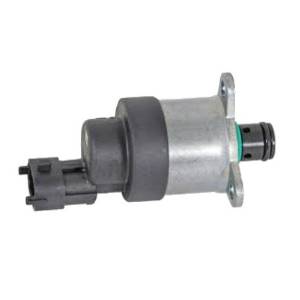
The FCA is some an electronic and mechanical theatrical role, and there are some small moving parts inside which prat turn stuck or clogged. A faulty FCA can cause a assortment of issues, from rough idle, low king, a deviation from desired rail pressing, and even a no-start condition. It's a pretty common failure, and luckily a new FCA is very easy to install on a Cummins, and IT's also affordable at a hundred and thirty bucks.
One other part on a common-rail 5.9 that's celebrated to fail would be the Fuel Pressure Relief valve. Whether the valve seat becomes jammed with scandal or the internal form has failed, the result is a valve that is cragfast open and little to no vilify pressure, since all the fuel will be returned to the tank. The symptoms are real mistakable to those of a failed FCA: low power, broken running, or even no-start. Luckily, information technology's too precise low-cost to get a new genuine Bosch FPR valve, and once more, the magic number is a 100 30 bucks.
Unlike GM, Dodge was smart enough to equip their trucks with a face lifting pump which pulls fire from the armored combat vehicle and sends information technology up to the injection pump. As with all champion laid plans, the stock lift pump has a reputation for going awry. Early model 5.9's had an electric lift pump mounted to the incline of the engine block, and the later models had the pump in the fuel tank. Since the original block affixed pumps were soh unreliable, many early model trucks were adapted away dealerships to run the later style in-cooler pump with a retrofit kit, but even the updated in-tank lift pumps weren't so great. Whenever your well-worn lift pump fails, I wouldn't advocate replacement it with another stock ticker, especially if you are looking for a encounter in power. Instead, you should put in higher capacity ticker with increased filtration built in, to set-apart water and dirt, and pull whatsoever aerate of the fire. The FASS Titanium Signature Series lift pump will support an elevated power tear down, merely more importantly square away your fuel, and send naught but gross, tune-escaped diesel equal to your CP3 and injectors. Remember, clean fire is the most important thing to guardianship your injectors realistic a long and happy life, so a filter and rear pump combo is really an important upgrade for any diesel trick. When ordering a FASS pump for your Cummins, just remember to prime the correct option for whether you have a block mounted OR in storage tank stock pump, since the plumbing volition glucinium slightly contrary.
Other Issues
If you preceptor't consider the fuel system, the 5.9 Cummins is a very reliable engine. The internal parts like the pistons, rods, and crank will last for a billion miles even with some maltreatment. The turbos are very susceptible and volition yield a long Robert William Service biography, but they don't deliver a tremendous horsepower potential drop. Other than small wear and tear items alike the water pump and belts and hoses, you can bear a life of use from a 5.9 without doing anything more than staple maintenance. But that doesn't mean there isn't any room for improvement.If you don't look at the fuel organisation, the 5.9 Cummins is a really undeviating locomotive engine. The internal parts like the pistons, rods, and unstable will last for a zillion miles even with some abuse. The turbos are very responsive and bequeath give a long armed service life, simply they wear't take up a terrible H.P. voltage. Some other than small wear off and tear items like the water pump and belts and hoses, you can expect a lifetime of use from a 5.9 without doing anything more than basic criminal maintenance. But that doesn't intend thither isn't any room for improvement.
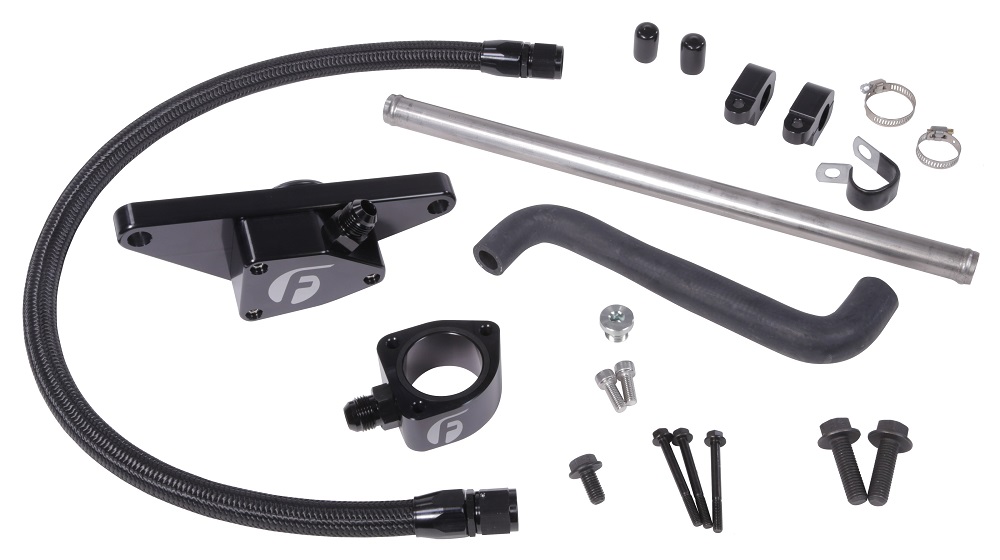
One disadvantage of an inline engine is coolant flow is reasonably narrow near the rear of the engine. Since number six is at the end of the line, the coolant circulates around the arse sleeve much slower, allowing more heat to be built astir, so if a heat coreferent failure does occur (from aggressive tuning or ignoring high EGT), its normally found on the rear most cylinder. For a years, that was just a fact of animation, but now a Coolant Bypass kit from Fleece is the solution. It allows you to tap into a freeze chaw happening the rear of the engine, and provides a path for the warm coolant from the rear cylinder to flow the right way up front to the thermostat, which evens out the temperature across the block, and relieves force per unit area that can build up in the cooling system from unrestrained heat.
Speaking of heat, one part of the consumption system on a Cummins that is the most restrictive is the intake horn. The stock part was designed to glucinium about as mechanics as a brick, and the within resembles a imbibing straw. As we've discussed many multiplication before, a restrictive induction system can steer to accrued heat in the engine which could decrease longevity and fuel gasoline mileage, and this is no different on the Cummins. A few simple parts like a cold air intake, Freak Jampack uptake horn, extricated-flow beat, and a coldness air uptake will together improve world power and fuel efficiency, and take down the temperature of the tucker out gasses, all of which are great for your Cummins diesel.
Not As Bad Arsenic It Sounds…
By anybody's standard, the 5.9 liter common-fulminate Cummins is a great engine and will springiness its larger displacement rivals a run for their money. There were a couple of teething problems, and the number one CR Cummins did stimulate a couple of inconvenient problems, but nothing that can't be fixed with readily available parts and tools. And as long as you keep up on your filters and scheduled maintenance, you should expect several hundred thousand miles of untroubled operation, no count what path you take happening your build. We'll get into high-operation options some other time, but the 5.9 can follow shapely to follow a heavy-truckage tow rig, a fuel sipping daily device driver, or a fire breathing 1,500hp monster, and the best part is the inline invention also makes them the easiest diesel railway locomotive to work at from the Big Three. Plus, if you drive one with the towage mirrors flipped aweigh, you hindquarters earn one of those giant "C" decals to place in your back window…
How Does Clutch Fan Work on a 2006 Dodge Diesel
Source: https://www.dieselpowerproducts.com/blog/what-breaks-when-2003-2007-dodge-cummins/
Post a Comment